Tag

Articles tagged hardware-safety

5 articles

An unlit two-lane road at night lit only by a vehicle's low beam, with hills silhouetted against the last light of the skyTechnical

Headlamp Safety: Half the Light Is Not Half the Road

A headlamp can lose half of its light on a hot night while every component behaves exactly as designed, and nothing tells the driver. Why LED lamps derate, how the inverse-square law turns lost light into lost seeing distance, and why the first small loss is the most expensive. New article, with a fictional pick-up at 90 km/h on an unlit road as the worked example.

5 min
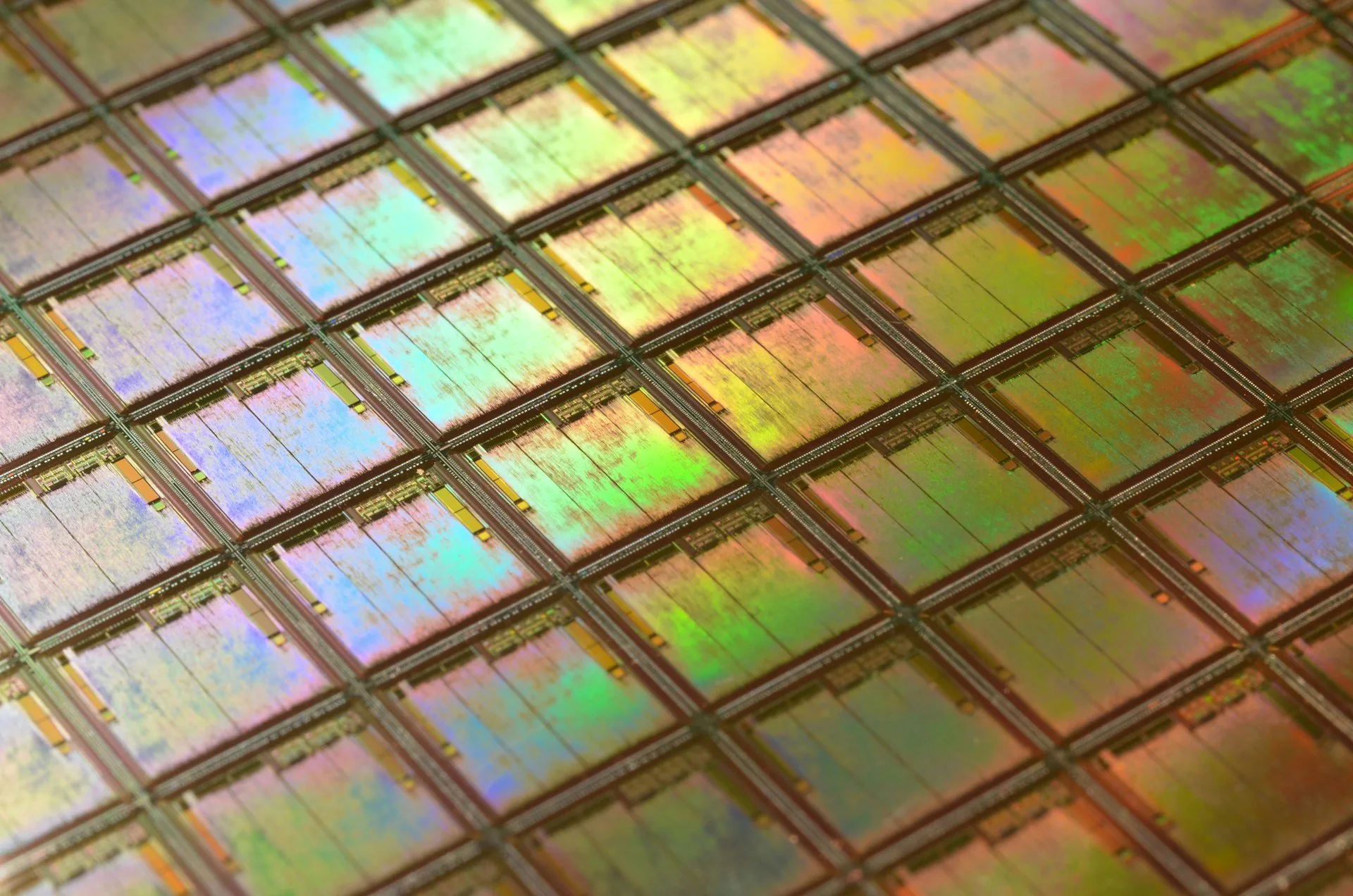
Close-up of a silicon wafer showing rows of identical chip dies, with coloured light reflecting across the patterned surfaceTechnical

Semiconductor Fault Campaign: Why Silence Is Not Safe

Thousands of simulated faults did nothing at all, and the metric improved because of it. What a fault campaign is for, why a fault must be activated before its silence means anything, and how a weak workload moves a hardware metric without any design change. New article, with a fictional 16-bit timestamp timer as the worked example.

6 min
Close-up of a silicon wafer with a grid of iridescent chip dies, shallow depth of field.Technical

When a Bit Flips: Soft Errors and Automotive Safety

A particle from space can change a value inside a working chip and leave nothing behind for a test to find. Soft errors are random hardware faults with no defect behind them. Testing cannot remove them, so ISO 26262 expects the design to handle them and the hardware metrics to count them. New article, with a crash threshold in an airbag control unit as the example.

6 min
Comparison table of ISO 26262 hardware metrics showing PMHF, SPFm, and LFm standards with their primary focus, measurement types, and typical ASIL D targets for automotive functional safety.Technical

Hardware Metrics Explained: PMHF, SPFM, and LFM Standards

Discover how automotive engineers calculate hardware metrics like PMHF, SPFm, and LFm to mathematically prove system safety in modern vehicle architectures. This guide explores the foundational standards used to quantify risk and ensure compliance.

8 min
Demystifying PMHF: A Guide to Hardware Metrics and FMEDATechnical

Demystifying PMHF: A Guide to Hardware Metrics and FMEDA

Discover how to calculate PMHF, SPFM, and LFM using the FMEDA technique to ensure automotive hardware safety compliance under ISO 26262 Part 5.

11 min

Related ISO 26262 guides

Each guide is a full course with diagrams and worked examples. Open one to see what it covers.

Browse all guides
  • HardwareHardware MetricsLearn how to calculate SPFM, LFM, and PMHF with correct failure rate data and diagnostic coverage values. Covers ASIL-dependent targets, data sources (IEC 61709, FIDES), common calculation pitfalls, and compliance strategies.Pro plan pricingExpert plan pricing16 chapters
  • HardwareSoft Errors & Transient FaultsA cosmic ray hits a memory cell and your ASIL D function computes with a wrong value. This concept walks from the physics of radiation-induced bit flips through single event effects, ECC and hardened design, all the way to Part 11 quantification.Expert plan pricing12 chapters
  • FoundationsFaults and FailuresLearn the complete fault taxonomy: single-point, residual, latent, and safe faults plus transient vs. permanent classifications. Covers FTTI analysis, dependent failure analysis, FMEDA calculations, and the bathtub curve.Pro plan pricingExpert plan pricing14 chapters
hardware-safety Articles | ISO 26262 Academy Blog