Category

Technical

45 articles

An engineer points at a wall planning board divided into phases and dates while three colleagues follow the plan.

The ISO 26262 Safety Plan: Write It to Be Used

A safety plan copied from the last program describes a project that no longer exists. ISO 26262 treats the safety plan as the safety manager's working tool: it starts from an impact analysis, records every tailored activity with a rationale, names a person for each activity, and is updated at the start of every phase. New article, with a carry-over shift-by-wire selector as the running example.

5 min
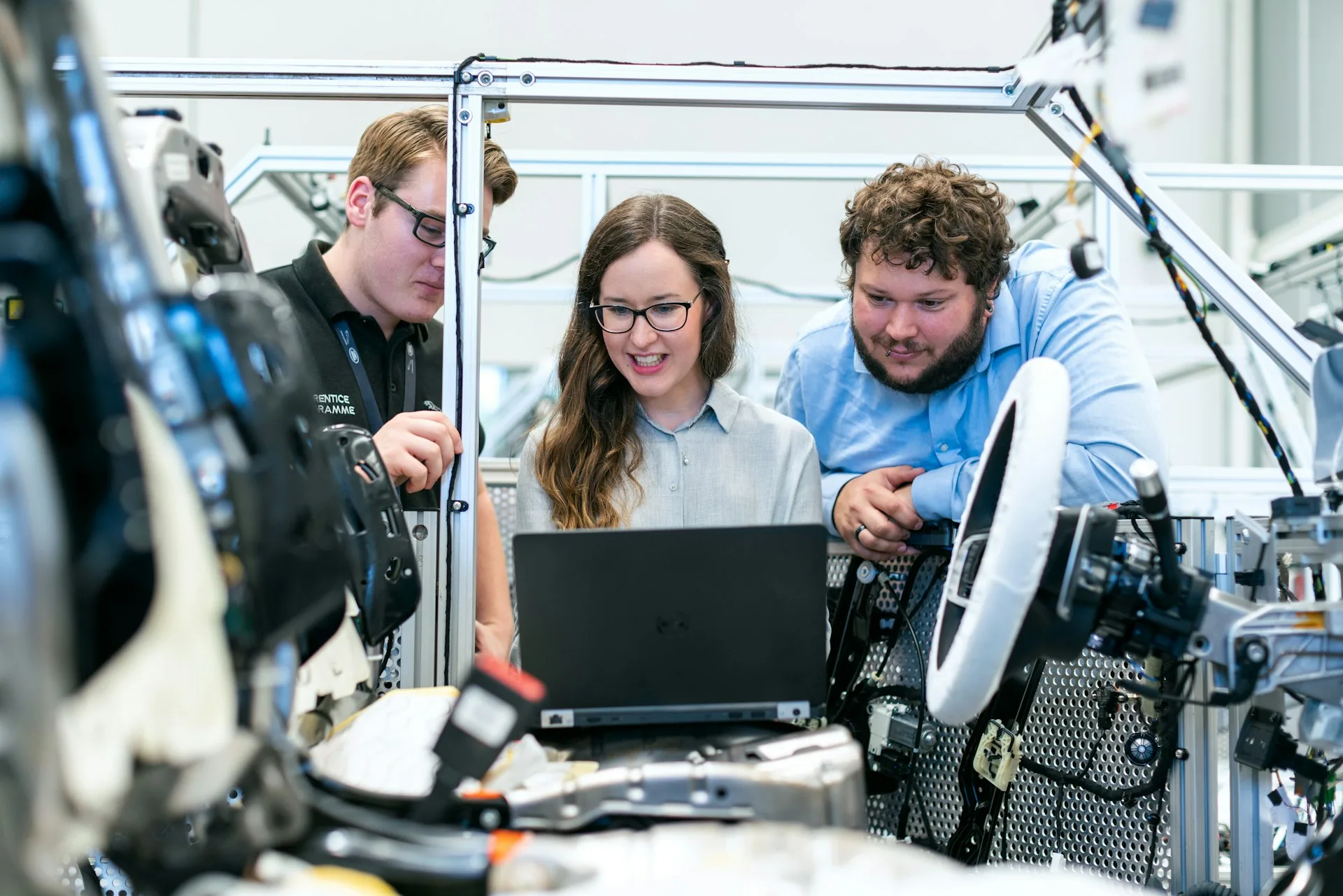
Three engineers share one laptop at a vehicle test rig with a steering wheel and wiring harnesses around them.

The Development Interface Agreement: Who Owns What in ISO 26262

Nobody develops the whole item. Safety still has to hold across the vehicle maker, the supplier, the chip vendor and the software house. The Development Interface Agreement is how ISO 26262 makes that work: who does which safety activity, who is responsible, what is exchanged, and what happens when something goes wrong. New article, worked through on a battery management system: where an agreement is needed, where it is not, and the four questions it has to answer.

4 min
Item Definition in ISO 26262: Where Every HARA Starts

Item Definition in ISO 26262: Where Every HARA Starts

A hazard analysis is only as good as what it was told about the system. In ISO 26262 that is the item definition: the boundary of the item, its operating modes and the vehicle situations they meet, actuator capability as numbers, the interfaces to other items and the assumptions behind them. New article, worked through on a power sliding door: where the boundary goes and what the hazard analysis needs to be told.

5 min
A friendly white robot works at a laptop; two glowing paths lead from it, one to a car driving on a road at dusk and one to a second laptop showing source code

AI Coding Agents and ISO 26262: Classify the Use, Not the Tool

An agent writes four hundred lines in eleven minutes. Tests included, coverage at target, analyzer clean. ISO 26262 has no clause for AI coding tools, and ISO/PAS 8800 says it does not cover them either. The existing rules already do: generated code is code, and each use of the assistant is a tool use with its own confidence level. Drafting code can sit at TCL1. A model that replaces a human reviewer, with nothing behind it, cannot. New article on where AI assistants and agents help, where they bite, and a policy that fits on one page.

7 min
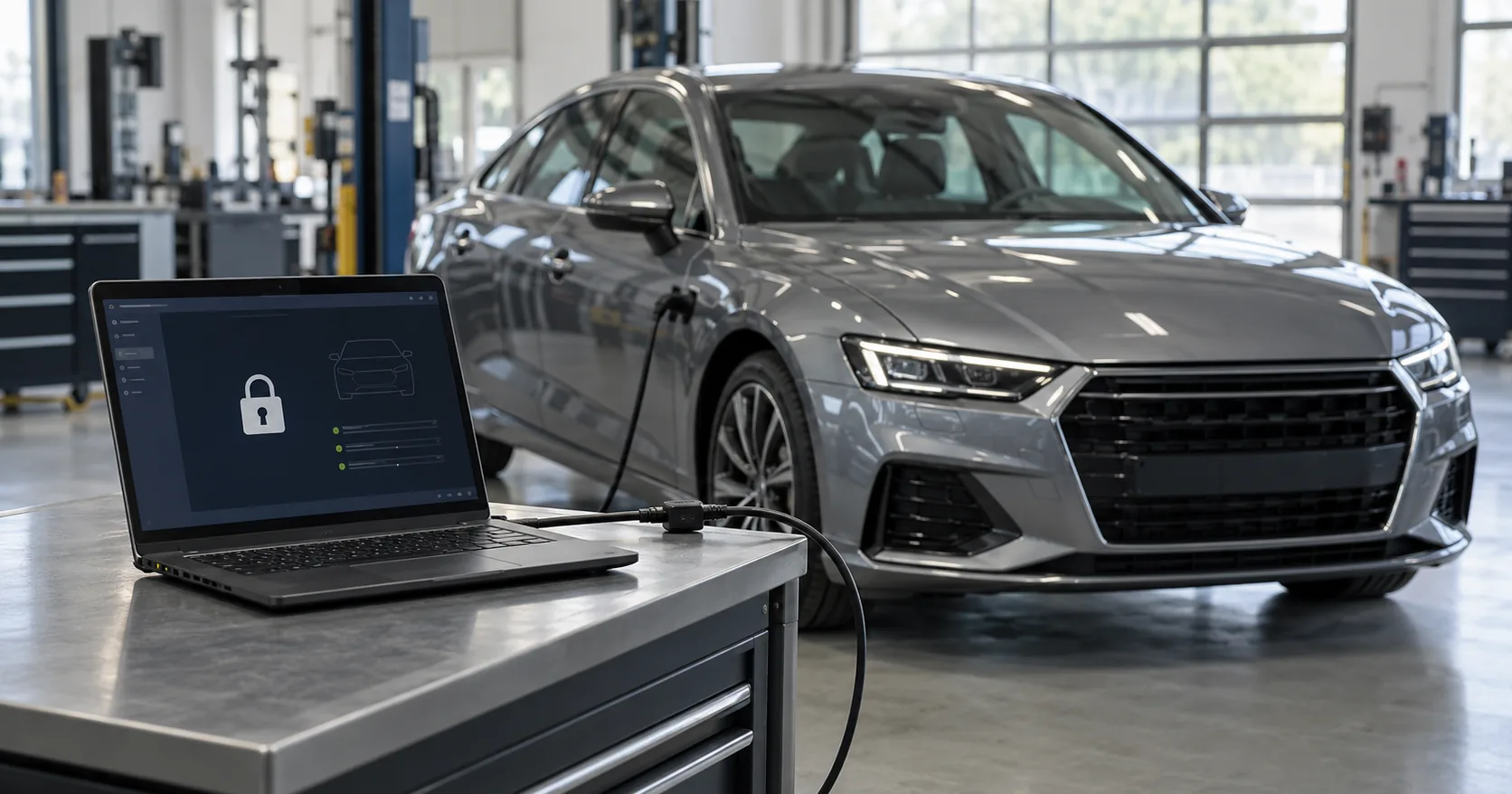
A laptop showing a padlock on a diagnostic screen, cabled to an unbadged grey saloon in a workshop: the diagnostic port as one of the vehicle's attack surfaces.

ISO/SAE 21434: Automotive Cybersecurity Explained

A connected vehicle is an attack surface on wheels. This article explains what ISO/SAE 21434 actually governs and why the five-minute read matters before you go deeper.

6 min
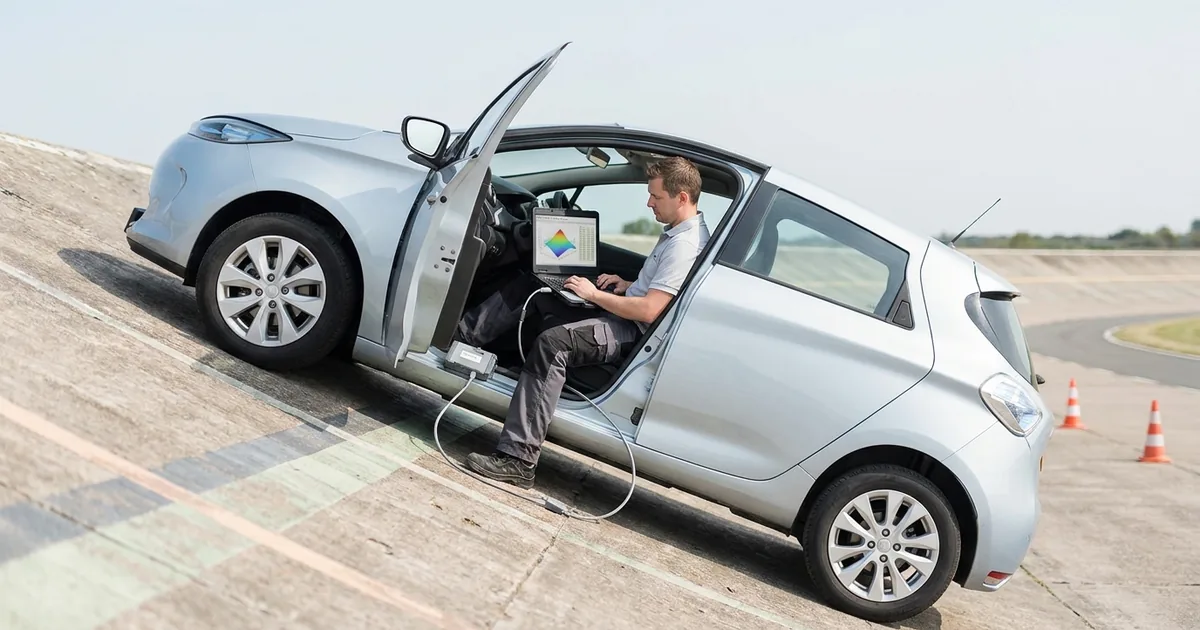
A calibration engineer sits in the open driver door of a silver hatchback parked on a proving-ground slope, tuning values on a laptop that shows a calibration map, cabled to an interface box on the door sill.

Calibration and Configuration Data in ISO 26262

How ISO 26262 handles parameter data: why the software build separates configuration data from calibration data, how each value inherits its ASIL, what a parameter specification and its verification cover, and which mechanisms detect unintended changes of calibration data in the ECU.

7 min
Three engineers at a lab workbench: one points at a measurement plot on a laptop, a senior colleague listens and another takes notes, with a prototype car on a lift and test equipment behind them.

Evaluating ISO 26262 Safety Culture: Evidence Over Slogans

How to evaluate a safety culture in an ISO 26262 organization from evidence rather than slogans: where safety collides with the schedule, which five project records show the real culture, what the functional safety audit and assessment already see, and three common misreadings.

7 min
Three engineers look at a laptop together beside a vehicle test rig with a steering wheel and wiring in a development workshop.

ISO 26262 Safety Culture: Competence and Accountability

Why ISO 26262 Part 2 regulates the organization: what safety culture means in the standard, how processes drift through the normalization of deviance, why responsibility needs authority and competence, and which of four checks asks which question.

7 min
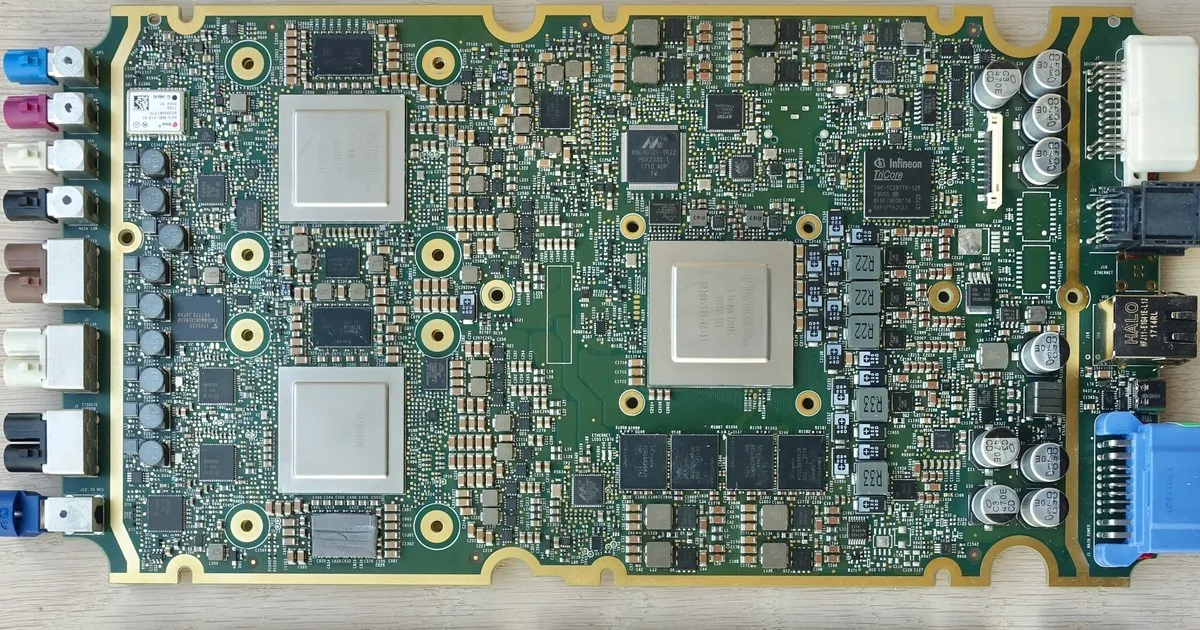
An automotive driver-assistance controller board with two identical processor packages side by side, next to a larger processor, memory, power components and a row of connectors, all on one PCB.

The Core Concept of Dependent Failure Analysis in ISO 26262

Two redundant channels are not automatically independent. What a dependent failure is, the difference between common cause and cascading failures, the coupling factors that tie elements together, and why ISO 26262 asks for DFA.

7 min
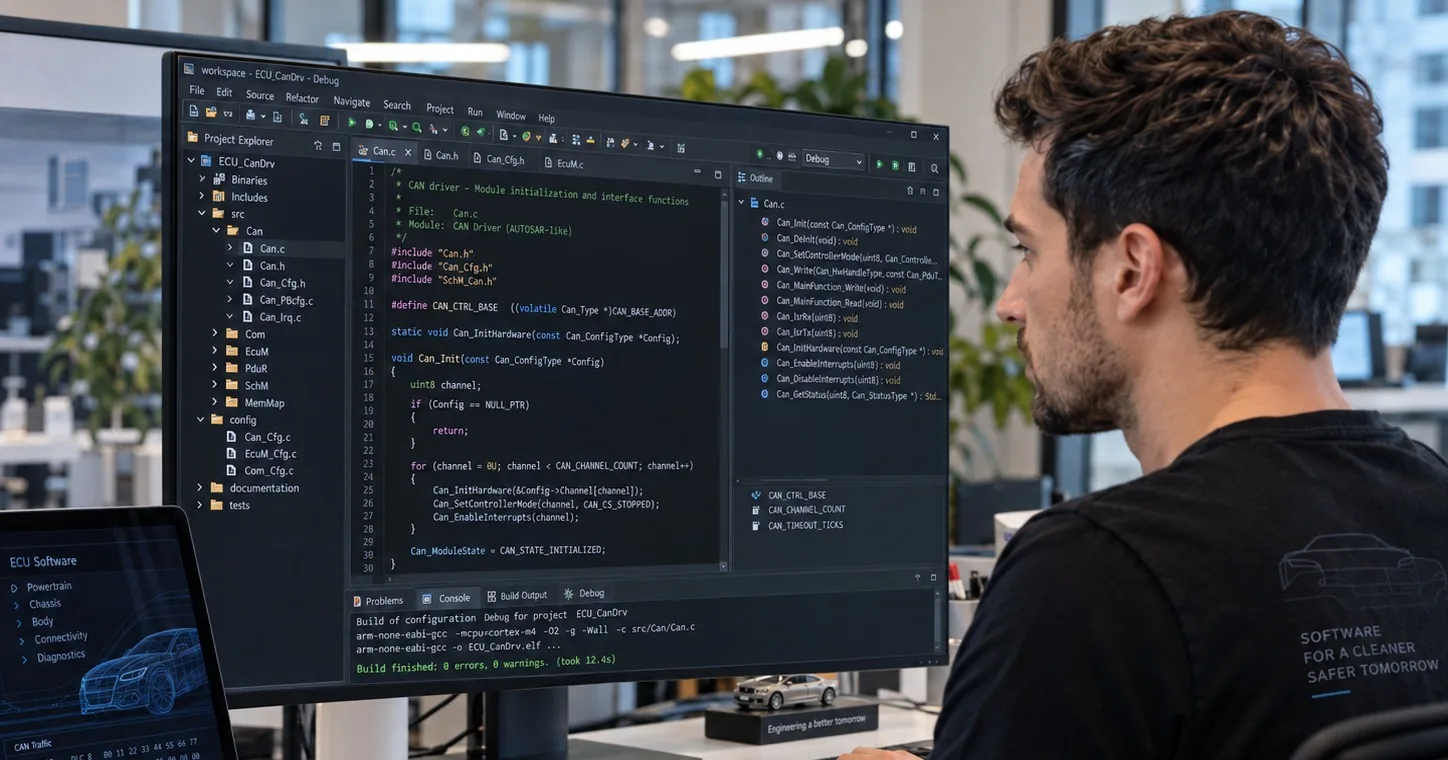
An engineer at a desk writing an AUTOSAR-style CAN driver in C for an ECU, with a cross-compiler build finishing with zero errors and a laptop showing ECU software domains and CAN traffic.

Software in ISO 26262: A Fault With No Failure Rate

Software has no failure rate, so ISO 26262 cannot count it. What the standard asks for instead, why software is both the safety net for hardware faults and a source of its own, and why Part 6 converges on the software architecture.

7 min
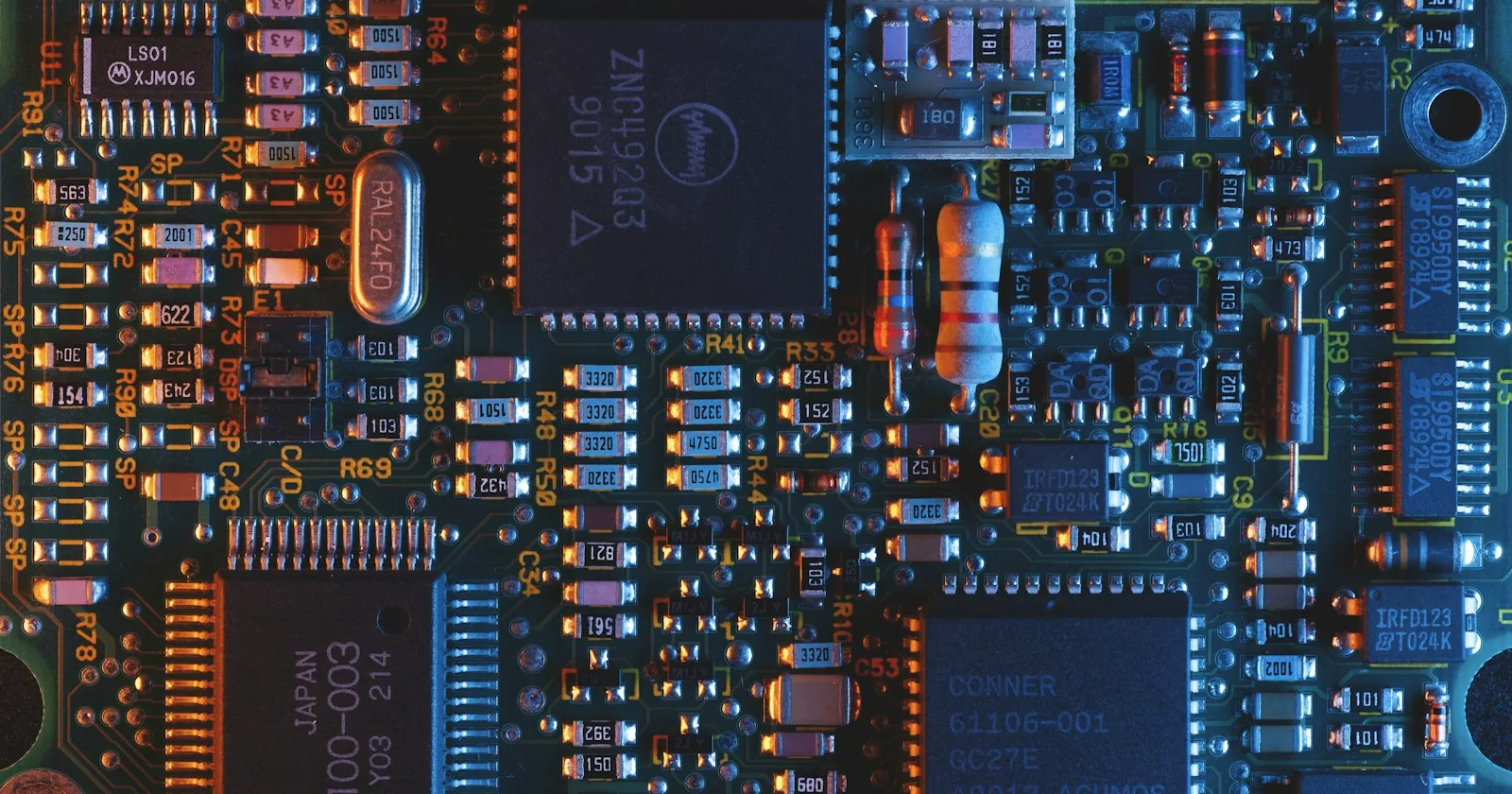
Close-up photograph of a populated circuit board with integrated circuits, resistors and capacitors under blue and orange lighting.

Hardware Element Evaluation: What Does the Evidence Prove?

A familiar component can face a different safety requirement in a new design. Explore what hardware element evaluation establishes, where its evidence stops, and why integration still matters.

3 min
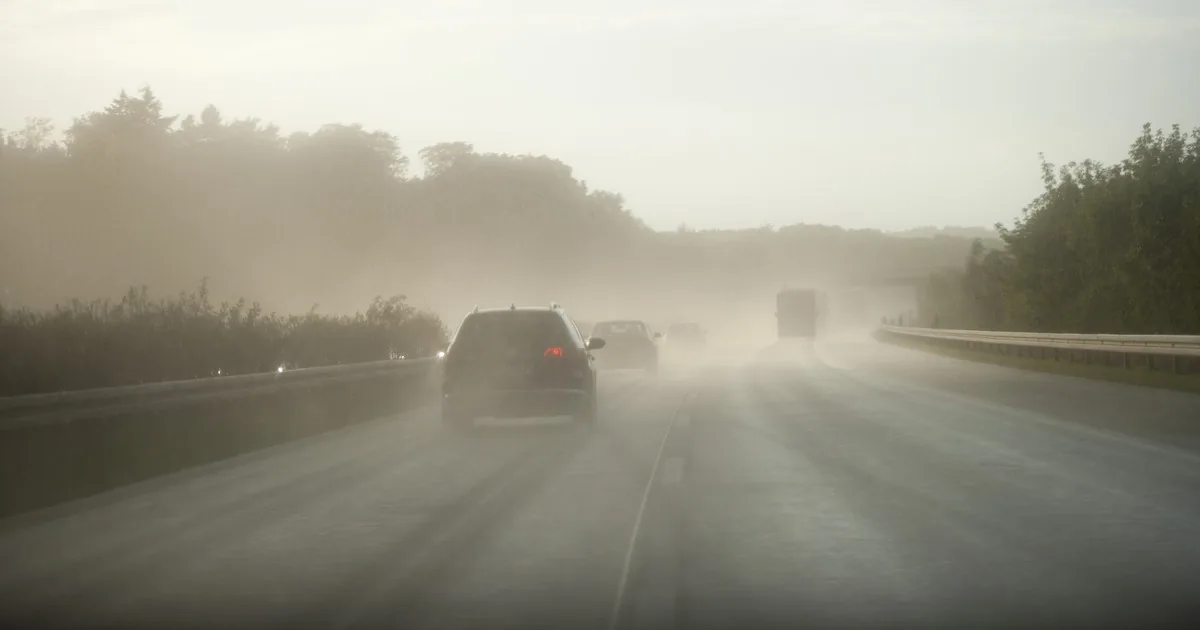
Driver's view down a wet motorway. Heavy spray from the traffic ahead hangs over the carriageway in a low backlit sun, and the painted lane markings fade out well before the cars do.

The Automotive Safety Standards Map: Beyond ISO 26262

A modern car can cause the same accident four different ways. Only one of them is a malfunction. Lane centering steers into the next lane. Same severity, same exposure, same controllability. One hazard. Now ask why. A solder joint opened. Or the camera worked perfectly and lost the markings in low sun. Or someone forged a steering frame on the bus. Or the model met a road marking that was never in its training data. ISO 26262 owns the first one, and it says so itself. The other three each got a document: ISO 21448, ISO/SAE 21434, ISO/PAS 8800. The hard part is not learning four standards. It is that one item definition and one hazard list have to feed four arguments that must not contradict each other. New article on where the backbone ends.

7 min

Keep learning

Go from article to full guide.

Each guide is a full course with diagrams and worked examples. Open one to see what it covers.

Browse all guides
  • FoundationsSafety Plan DevelopmentLearn how to plan all safety activities, roles, milestones, and work products across the ISO 26262 lifecycle. Includes Gantt chart visualization, tailoring guidelines, and audit readiness strategies.Expert plan pricing8 chapters
  • FoundationsDevelopment Interface AgreementLearn how to define clear safety responsibilities and evidence exchange between OEM and supplier per ISO 26262-8. Covers DIA content structure, RASIC matrix, lifecycle from initiation to production, and assessment coordination.Expert plan pricing13 chapters
  • Concept phaseHazard Analysis & Risk Assessment (HARA)Learn how to identify vehicle-level hazards and assign ASIL ratings through Severity, Exposure, and Controllability assessment. Covers operational situations, FTTI concepts, and advanced topics for ADAS and distributed systems.Pro plan pricingExpert plan pricing14 chapters