Tag

Articles tagged fmeda

4 articles

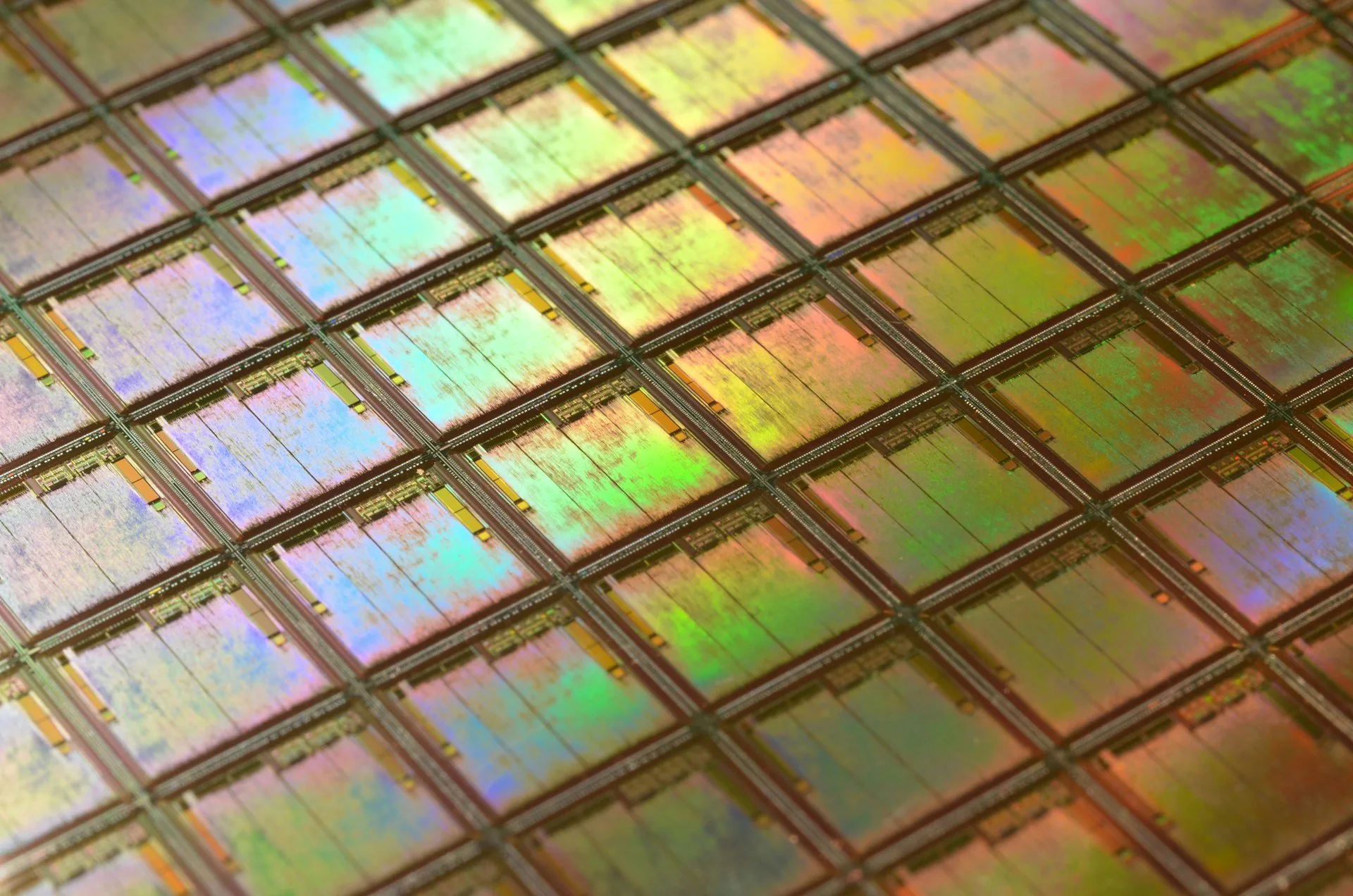
Close-up of a silicon wafer showing rows of identical chip dies, with coloured light reflecting across the patterned surfaceTechnical

Semiconductor Fault Campaign: Why Silence Is Not Safe

Thousands of simulated faults did nothing at all, and the metric improved because of it. What a fault campaign is for, why a fault must be activated before its silence means anything, and how a weak workload moves a hardware metric without any design change. New article, with a fictional 16-bit timestamp timer as the worked example.

6 min
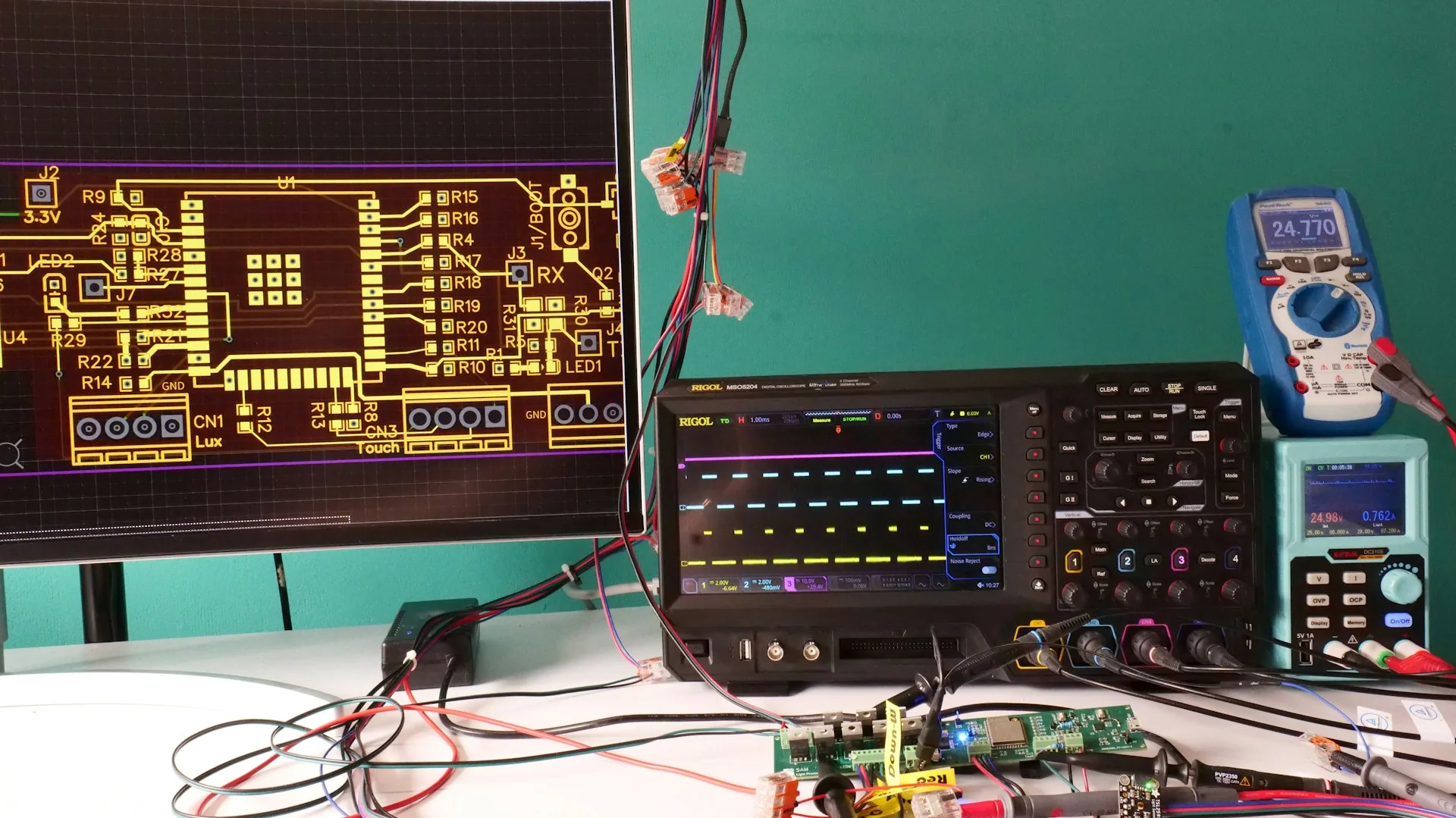
An electronics workbench with an oscilloscope showing several waveforms, a multimeter, a circuit board under test with probe wires, and a board layout on a monitor.Technical

Fault Injection: Proving Diagnostic Coverage Instead of Claiming It

300 injected faults, 300 detected, and the voltage supervisor still covers only about 80 % of the failure rate it was credited with. The 99 % in an FMEDA row usually comes from a handbook table. Fault injection tests the mechanism as built, and the result only means something when each failure mode is weighted by its share of the failure rate. New article, with a core supply supervisor and its deglitch filter as the worked example.

6 min
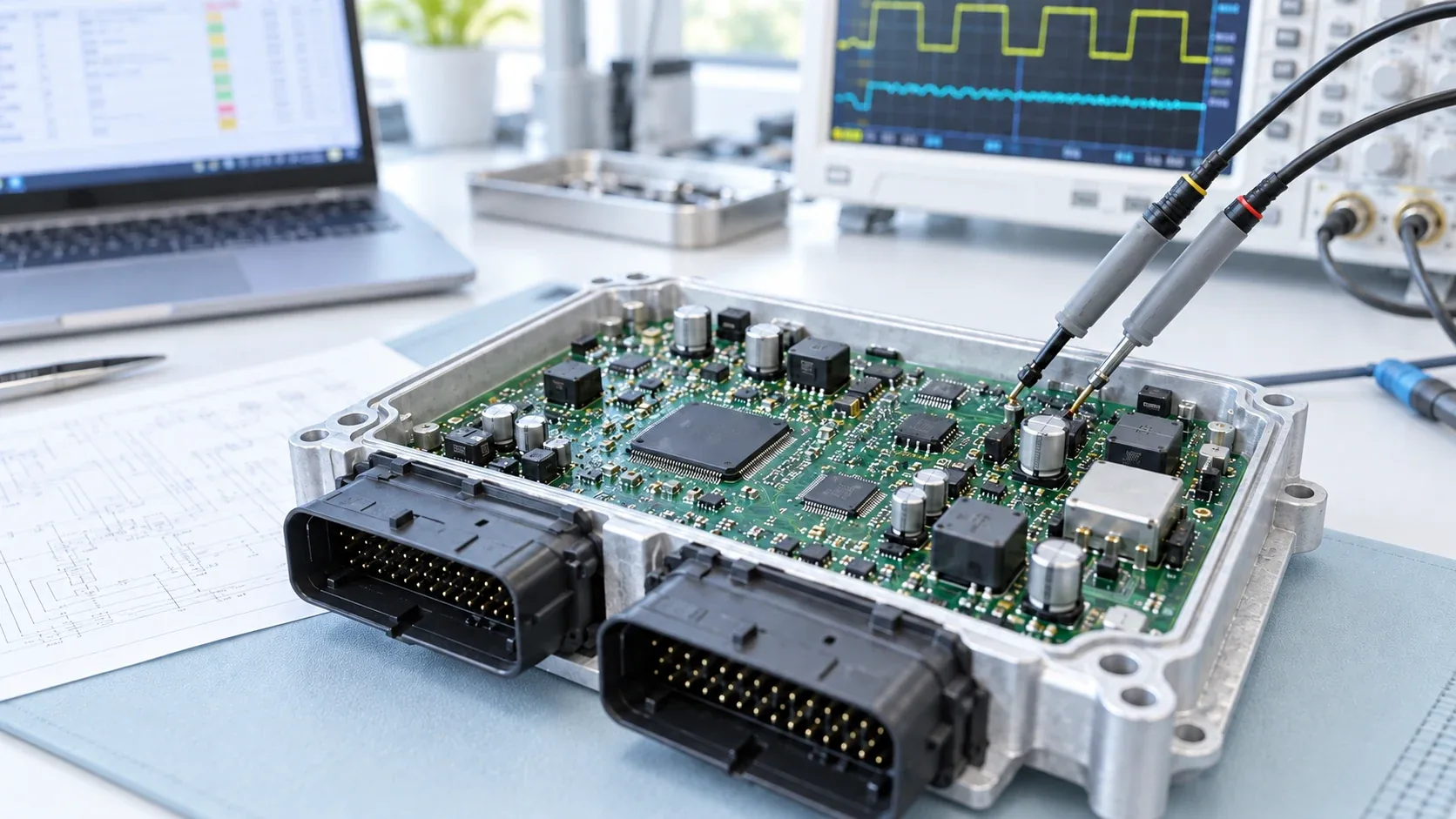
AI-generated illustration of an automotive ECU on an electronics test bench, with oscilloscope probes, a schematic and an analysis screen.

Why FMEDA Matters for ISO 26262: Five Practical Reasons

Hardware can fail systematically, through errors made during development, or randomly, as parts wear or break in service. FMEDA addresses the random failures, connecting failure analysis with stronger evidence and better engineering decisions. Explore five reasons it matters for ISO 26262 projects, from revealing diagnostic gaps and examining supplier assumptions to guiding improvements and keeping the safety argument aligned with a changing design.

6 min
Demystifying PMHF: A Guide to Hardware Metrics and FMEDATechnical

Demystifying PMHF: A Guide to Hardware Metrics and FMEDA

Discover how to calculate PMHF, SPFM, and LFM using the FMEDA technique to ensure automotive hardware safety compliance under ISO 26262 Part 5.

11 min

Related ISO 26262 guides

Each guide is a full course with diagrams and worked examples. Open one to see what it covers.

Browse all guides
  • HardwareFMEDA: Quantitative Hardware Safety AnalysisLearn how Failure Modes, Effects and Diagnostic Analysis turns component failure rates in FIT, failure-mode distributions, and diagnostic coverage into the SPFM, LFM, and PMHF metrics that ISO 26262-5 requires for safety-related hardware.Expert plan pricing10 chapters
  • HardwareHardware MetricsLearn how to calculate SPFM, LFM, and PMHF with correct failure rate data and diagnostic coverage values. Covers ASIL-dependent targets, data sources (IEC 61709, FIDES), common calculation pitfalls, and compliance strategies.Pro plan pricingExpert plan pricing16 chapters
  • Verification and assessmentFault Injection & Safety-Mechanism VerificationProve that safety mechanisms detect and react to faults within the Fault-Tolerant Time Interval, turning FMEDA Diagnostic Coverage claims into demonstrated evidence across hardware, software, simulation, and system-level ISO 26262 campaigns.Expert plan pricing10 chapters
fmeda Articles | ISO 26262 Academy Blog