Tag

systematic-faults

4 articles

A car raised on a red axle stand in a workshop, its front suspension strut removed and lying on the floor, with the steering tie rod ends hanging free while a mechanic works underneath.Technical

The Forgotten Half of ISO 26262: Production and Service

A wheel alignment that touches no sensor and still leaves the stability control with the wrong idea of straight ahead. ISO 26262 Part 7 is where design intent survives the factory floor and the workshop, or gets lost there. The carrier is the safety-related special characteristic, and the service instruction decides whether a garage restores it or quietly undoes it. New article, with a steering angle sensor zero point as the worked example.

7 min
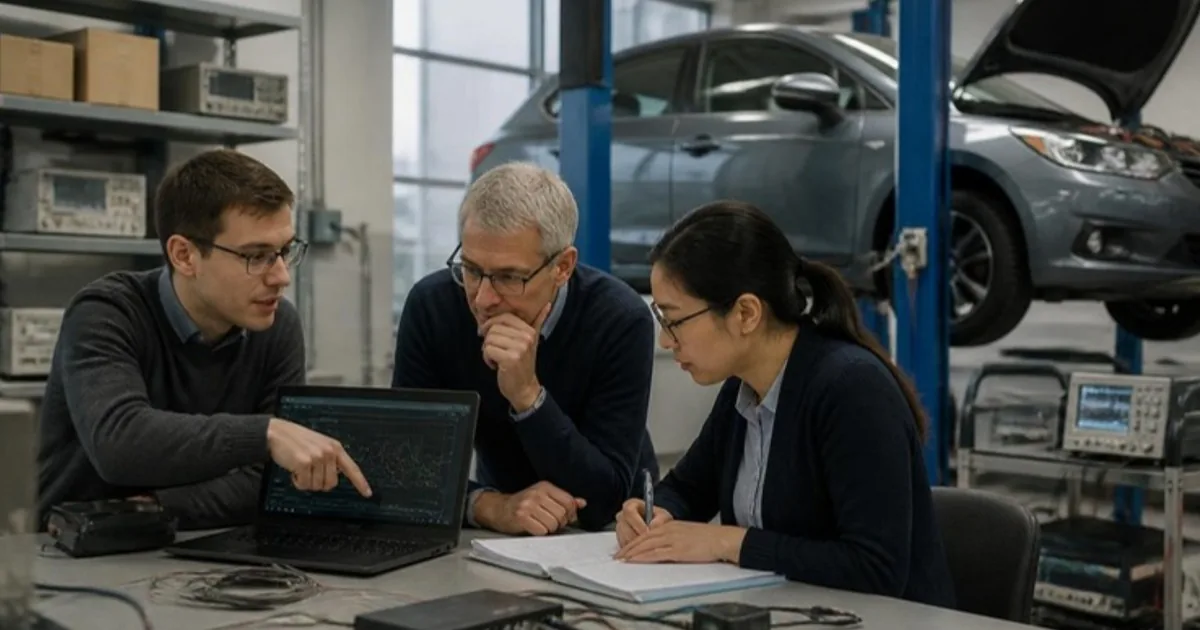
Three engineers at a lab workbench: one points at a measurement plot on a laptop, a senior colleague listens and another takes notes, with a prototype car on a lift and test equipment behind them.Technical

Evaluating ISO 26262 Safety Culture: Evidence Over Slogans

How to evaluate a safety culture in an ISO 26262 organization from evidence rather than slogans: where safety collides with the schedule, which five project records show the real culture, what the functional safety audit and assessment already see, and three common misreadings.

7 min
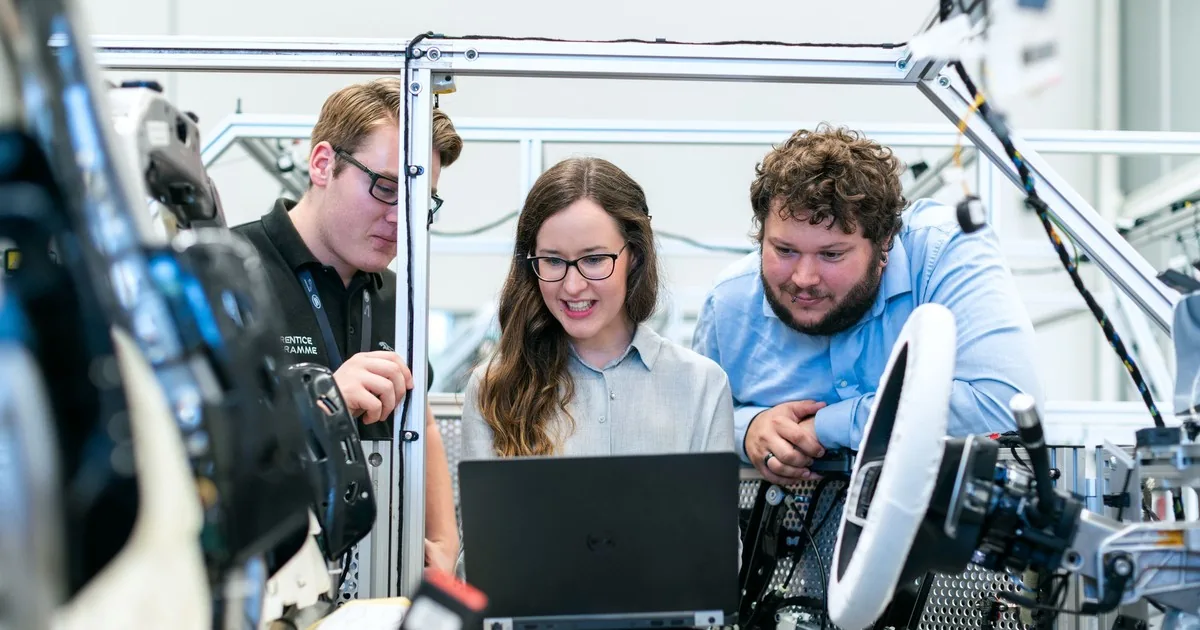
Three engineers look at a laptop together beside a vehicle test rig with a steering wheel and wiring in a development workshop.Technical

ISO 26262 Safety Culture: Competence and Accountability

Why ISO 26262 Part 2 regulates the organization: what safety culture means in the standard, how processes drift through the normalization of deviance, why responsibility needs authority and competence, and which of four checks asks which question.

7 min
An engineer at a desk writing an AUTOSAR-style CAN driver in C for an ECU, with a cross-compiler build finishing with zero errors and a laptop showing ECU software domains and CAN traffic.Technical

Software in ISO 26262: A Fault With No Failure Rate

Software has no failure rate, so ISO 26262 cannot count it. What the standard asks for instead, why software is both the safety net for hardware faults and a source of its own, and why Part 6 converges on the software architecture.

7 min

Keep learning

Go from article to full guide.

Each guide is a full course with diagrams and worked examples. Open one to see what it covers.

Browse all guides
  • FoundationsSafety Culture & CompetenceISO 26262 Part 2 made operational: observable safety culture indicators, building the safety organization, independence of confirmation measures, provable competence records, anomaly handling, and how to measure culture and make the safety-first commitment real.Expert plan pricing12 chapters
  • System levelFreedom from Interference (FFI)Learn how to ensure elements of different ASILs do not interfere through temporal, spatial, and data partitioning. Covers MPUs, hypervisors, bus monitoring, multi-core strategies, and evidence generation for assessments.Expert plan pricing10 chapters
  • FoundationsFaults and FailuresLearn the complete fault taxonomy: single-point, residual, latent, and safe faults plus transient vs. permanent classifications. Covers FTTI analysis, dependent failure analysis, FMEDA calculations, and the bathtub curve.Pro plan pricingExpert plan pricing14 chapters