 ISO 26262Academy
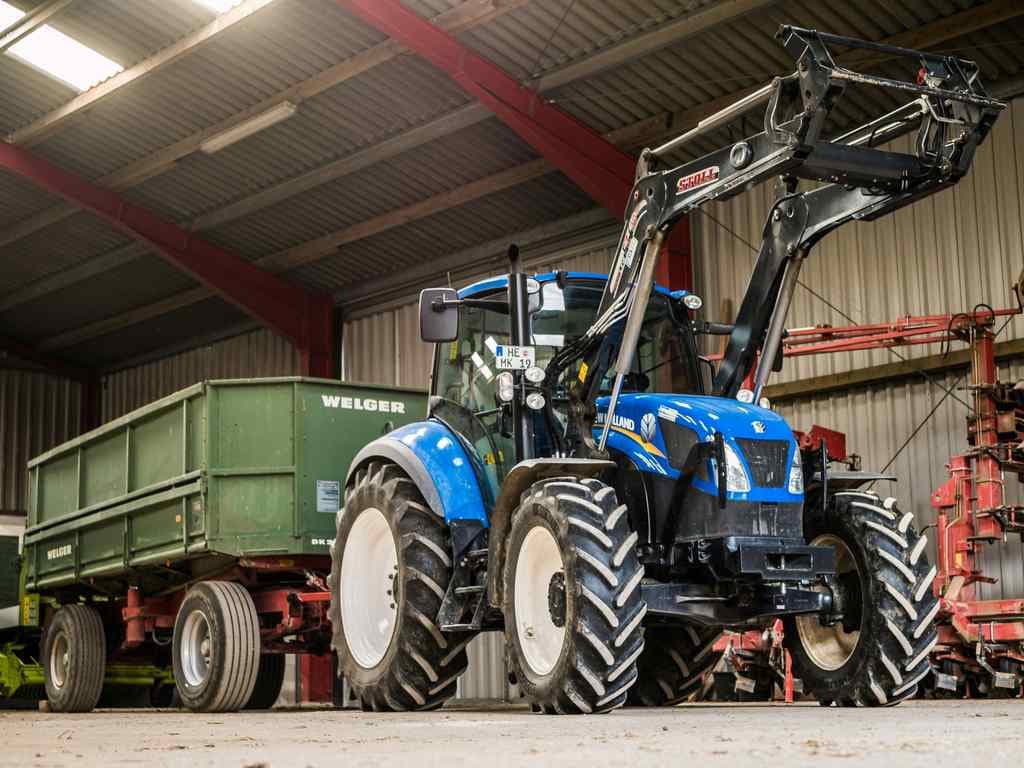
An autonomous tractor is operating in a dense agricultural field alongside human workers. Now, picture a passenger car equipped with Advanced Driver Assistance Systems navigating a chaotic urban intersection. Both of these complex machines rely heavily on electronic systems to prevent catastrophic accidents. However, if you look under the hood of their functional safety engineering, you will find two distinct philosophies at play.
For engineers transitioning between the automotive sector and industrial equipment, the learning curve can be steep. While the fundamental goal of protecting human life remains identical, the methodologies, risk assessment metrics, and architectural assumptions differ significantly. Understanding these differences is crucial for anyone designing systems that blur the lines between vehicles and industrial machinery.
In this article, we will explore a brief comparison between the automotive domain, governed by ISO 26262, and the machinery domain, governed by standards like ISO 13849 and IEC 62061. We will examine how their origins, risk assessment strategies, and system architectures shape the way we engineer safety.
The Roots of the Standards: Automotive vs. Machinery
| Attribute | Automotive (ISO 26262) | Machinery (ISO 13849 / IEC 62061) |
|---|---|---|
| Primary Standard Lineage | Derived from IEC 61508 | Derived from IEC 61508 |
| Target Application | Series production passenger vehicles | Industrial equipment, manufacturing cells |
| Production Volume | High volume (millions of units) | Low volume or custom one-off builds |
| Risk Metric | ASIL (Automotive Safety Integrity Level) | PL (Performance Level) or SIL |
| Hardware Approach | Bespoke design, custom silicon (MCUs) | Integration of proven-in-use COTS components |
To understand the differences between these domains, we must first look at their origins. Both automotive and machinery functional safety standards share a common ancestor in IEC 61508, the basic functional safety standard applicable to all kinds of industry. However, as technologies specialized, the standards diverged to address domain-specific challenges.
ISO 26262 was published to address the unique needs of series production passenger cars. The automotive industry is characterized by massive production volumes, highly distributed global supply chains, and intense cost pressures. Consequently, ISO 26262 provides a highly prescriptive, V-model-driven framework tailored for developing bespoke electronic hardware and software from the ground up.
Conversely, the machinery sector relies heavily on ISO 13849 and IEC 62061. Industrial machinery often involves custom-built equipment, low-volume production runs, or highly specialized manufacturing cells. These standards place a strong emphasis on integrating proven-in-use, Commercial Off-The-Shelf components. Rather than designing custom microcontrollers for every machine, machinery engineers often rely on certified safety programmable logic controllers and ruggedized industrial sensors.
Risk Assessment Approaches: ASIL vs. PL and SIL
The most visible difference between these two domains lies in how they quantify and classify risk. In the automotive world, the cornerstone of risk assessment is the Hazard Analysis and Risk Assessment. The HARA evaluates three specific factors to determine an Automotive Safety Integrity Level.
- Severity: The potential harm to the driver, passengers, or pedestrians.
- Exposure: The probability of being in the operational situation where the hazard occurs.
- Controllability: How likely it is that the driver or other road users could still react in time and avoid the harm.
Controllability is a uniquely automotive concept. For example, consider an Electric Power Steering system failing by applying unintended maximum torque at highway speeds. The HARA must assess whether an average driver has the physical strength and reaction time to overpower the steering wheel and maintain control of the vehicle. If the driver cannot control it, the resulting ASIL will be high.
In the machinery domain, risk assessment focuses on determining a Performance Level or a Safety Integrity Level. The parameters evaluated are similar but lack the automotive assumption of dynamic driver control.
- Severity of Injury: Ranging from slight reversible injuries to death.
- Frequency of Exposure: How often an operator interacts with the hazard zone.
- Possibility of Avoidance: Whether the operator can recognize the hazard and escape before harm occurs.
In a factory setting, the possibility of avoidance rarely involves wrestling for control of the machine. Instead, it relates to the speed of the machine's movement, the presence of warning signals, and whether the operator has a physical escape route. If a robotic arm swings unexpectedly, the operator cannot steer it back on course; they can only try to get out of the way.
Operational Context: The Open Road vs. The Factory Floor
The environments in which these systems operate dictate entirely different engineering assumptions. Automotive systems must survive the open road. The operational design domain of a passenger car includes unpredictable weather, decaying infrastructure, and interactions with untrained consumers who may misuse the vehicle.
Functional safety in automotive engineering must account for a chaotic, open-world environment where the system designer has zero control over external variables or the training level of the end-user.
Industrial machinery operates in semi-controlled or strictly controlled environments. A factory floor has defined walkways, physical barriers, and strict access controls. Furthermore, the people interacting with machinery are trained professionals. They wear personal protective equipment and follow standardized operating procedures. This allows machinery safety engineers to rely heavily on physical guarding, interlock switches, and light curtains as primary safety mechanisms, whereas automotive engineers must rely almost entirely on embedded software and electronic diagnostics.
System Architecture and Safety Mechanisms
Because the operational contexts differ so drastically, the resulting system architectures also diverge. The fundamental question engineers must ask is how the system should behave when a critical fault is detected.
In machinery safety, the primary goal is almost always to achieve a fail-safe state. If a sensor detects a human entering a restricted manufacturing cell, or if an internal memory fault is detected in the safety controller, the system responds by removing power. The machine immediately halts all hazardous movement. Safe Torque Off is a classic machinery safety mechanism. In a factory, a stopped machine is a safe machine.
In the automotive domain, simply turning off the system is not always safe. Consider an Advanced Emergency Braking system or a Steer-by-Wire system traveling at 120 kilometers per hour. If a fault occurs, shutting down the steering system entirely would guarantee a catastrophic accident. Therefore, automotive engineering is increasingly pushing toward fail-operational architectures. These systems require complex redundancies, allowing the vehicle to maintain basic steering and braking functions long enough to reach a safe stop on the side of the road.
Bridging the Gap: When Automotive Tech Meets Machinery
Historically, the boundary between these two domains was clear. Today, the rise of autonomous mobile robots, automated guided vehicles, and self-driving agricultural equipment has blurred the lines completely. An automated forklift operating in a warehouse shares characteristics of both a vehicle and an industrial machine.
Engineers tasked with developing these crossover systems face a unique challenge. They must often blend the rigorous software development lifecycle of ISO 26262 with the system-level integration practices of ISO 13849. If you find yourself bridging this gap, consider the following practical checklist.
Cross-Domain Safety Engineering Checklist
- Define the Regulatory Boundary: Determine clearly whether the end product is legally classified as a road vehicle, a machine, or both depending on the operating mode.
- Map the Metrics: Establish an internal equivalence matrix mapping ASIL requirements to target Performance Levels (PL) for hardware components.
- Evaluate Human Interaction: Do not assume automotive controllability applies to industrial operators, and do not assume industrial avoidance applies to untrained consumers.
- Assess COTS Viability: Determine if you can use proven-in-use industrial components, or if the space, weight, and power constraints require custom automotive-grade silicon.
- Define the Safe State: Explicitly document whether a fault requires a fail-safe (immediate stop) or fail-operational (degraded mode) response based on the specific operational environment.
Conclusion
While ISO 26262 and machinery safety standards share a common foundation in risk reduction, their practical applications reflect two very different worlds. Automotive safety is defined by high-volume production, unpredictable environments, and the critical concept of driver controllability. Machinery safety is defined by controlled industrial environments, trained operators, and robust fail-safe architectures utilizing commercial off-the-shelf components.
As technology continues to evolve, engineers who understand the nuances of both domains will be uniquely positioned to design the next generation of autonomous and industrial systems. Mastering one standard provides a strong foundation, but adapting to the context of the other is where true engineering expertise shines.
Are you ready to expand your functional safety expertise beyond the passenger car? Dive deeper into cross-domain applications by exploring our specialized courses on the ISO 26262 Academy platform. Test your knowledge with our free practice exams, or enroll in our advanced modules to master the intersection of automotive and industrial safety engineering.
Abbreviations & Key Definitions
- ASIL - Automotive Safety Integrity Level, a risk classification scheme defined by ISO 26262 based on severity, exposure, and controllability.
- COTS - Commercial Off-The-Shelf, referring to ready-made hardware or software products available for purchase and integration.
- EPS - Electric Power Steering, an automotive system that uses an electric motor to assist the driver in steering the vehicle.
- HARA - Hazard Analysis and Risk Assessment, the core methodology in ISO 26262 used to identify hazards and assign ASILs.
- IEC - International Electrotechnical Commission, the body that writes the international standards for electrical and electronic technology, IEC 61508 among them.
- ISO - International Organization for Standardization, an international non-governmental organization made up of national standards bodies.
- PL - Performance Level, the ISO 13849 rating, from PL a to PL e, of how reliably a machine's safety-related control parts carry out their safety function.
- PLC - Programmable Logic Controller, an industrial digital computer ruggedized and adapted for the control of manufacturing processes.
- SIL - Safety Integrity Level, a relative level of risk-reduction provided by a safety function, as defined in standards like IEC 61508 and IEC 62061.
Last updated: 2 October 2026

Comments
Loading comments