 ISO 26262Academy
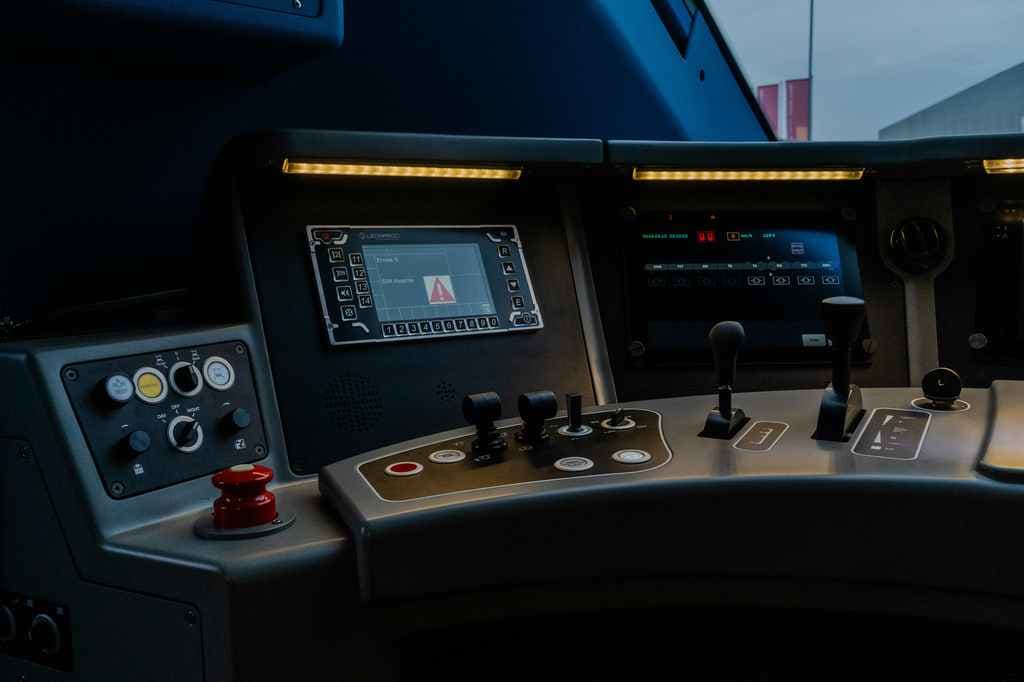
If a passenger car loses its primary brakes, the driver can still steer to the side of the road or pull the emergency brake. If a high-speed commuter train loses its brakes, the operator cannot steer away from a collision. The fundamental physics of the vehicle dictate entirely different approaches to functional safety. This reality shapes the standards that govern both industries.
While both automotive and railway functional safety standards trace their origins back to the overarching IEC 61508 standard, they have evolved into distinct methodologies. Automotive engineers rely heavily on ISO 26262 to manage the safety of electrical and electronic systems in mass-produced vehicles. Railway engineers look to the CENELEC EN 5012x series to secure highly complex, infrastructure-dependent train networks.
If you are an automotive engineer curious about railway safety, or a safety manager looking to cross-pollinate best practices between domains, understanding these differences is crucial. This article explores how automotive ISO 26262 principles compare to railway safety standards, focusing on risk assessment, system response, and lifecycle management.
The Core Philosophies: Mass Production Versus Infrastructure
| Attribute | Automotive (ISO 26262) | Railway (EN 5012x) |
|---|---|---|
| Production Volume | High volume, mass production | Low volume, project-specific |
| Risk Metric | ASIL (Automotive Safety Integrity Level) | SIL (Safety Integrity Level) |
| Human Factor | Driver controllability is a core risk factor | Operator control is limited; system must be absolute |
| Typical Safe State | Disable feature, alert driver, continue driving | Apply emergency brakes, stop the train |
| Lifecycle Duration | 10 to 15 years | 30 to 40 years |
The most significant difference between automotive and railway safety lies in the deployment model. This deployment model fundamentally changes how safety is verified and validated.
Automotive engineering is driven by high-volume mass production. When you design a component under ISO 26262, you are designing a system that will be replicated millions of times. The safety case must account for a wide variety of unpredictable environments, diverse driver behaviors, and varying maintenance schedules. Because the manufacturer loses direct control over the vehicle once it is sold, the system must be inherently robust.
Railway engineering operates on a project-based, low-volume model. A train network is a tightly controlled ecosystem. The trains, the tracks, the signaling systems, and the operators are all managed by a central authority or a small group of highly regulated entities. The CENELEC standards reflect this reality. Railway safety is not just about the train itself; it is about the integration of the rolling stock with the trackside infrastructure.
Key Takeaway on Domain Philosophies
Automotive safety focuses on the independent vehicle navigating an unpredictable world. Railway safety focuses on a dependent vehicle operating within a highly controlled, synchronized infrastructure.
Risk Assessment: ASIL Versus SIL
Risk assessment is the beating heart of any functional safety standard. In ISO 26262, this process is known as Hazard Analysis and Risk Assessment (HARA). The goal of HARA is to determine the Automotive Safety Integrity Level (ASIL) for a given hazard.
ASIL is calculated using three factors: Severity (how bad the injury is), Exposure (how often the vehicle is in a situation where the hazard could occur), and Controllability (how easily the driver can avoid the accident). The inclusion of Controllability is a unique hallmark of automotive safety. ISO 26262 acknowledges that a human driver is an active participant in the safety loop who can steer, brake, or accelerate out of danger.
Railway safety uses Safety Integrity Levels (SIL), ranging from SIL 1 to SIL 4. The railway risk assessment process evaluates the frequency of a hazardous event and the severity of its consequence. However, the concept of driver controllability is vastly different. A train operator cannot steer to avoid an obstacle. If a hazard occurs, the operator's only recourse is usually to apply the brakes. Therefore, railway risk assessments rely much more heavily on absolute system reliability and fail-safe mechanisms rather than human intervention.
The Role of Tolerable Hazard Rates
In the railway domain, safety targets are often defined by Tolerable Hazard Rates (THR). Authorities determine an acceptable rate of failure for the entire railway system, which is then apportioned down to individual subsystems. ISO 26262 uses a somewhat similar concept with probabilistic metrics for hardware failures, but the railway approach is far more prescriptive regarding overall system-level targets.
System Response and the Safe State
When a critical failure occurs, the system must transition to a safe state. The definition of this safe state highlights a major divergence between cars and trains.
Consider a practical example using an Automatic Emergency Braking (AEB) system. In a passenger car, if the AEB radar sensor becomes blocked by heavy snow, the ISO 26262 safe state is typically to disable the AEB feature, alert the driver via a dashboard warning, and return full manual control to the human. The car continues to drive. This is because stopping a car abruptly on a busy highway could cause a worse accident than simply disabling the feature.
Now consider an Automatic Train Protection (ATP) system. The ATP ensures the train does not exceed speed limits or pass red signals. If the ATP system loses communication with the trackside sensors, the safe state is almost universally to apply the emergency brakes and bring the train to a complete stop. In railway engineering, a stopped train is a safe train. The tracks are exclusive right-of-ways, so stopping does not introduce the same unpredictable collision risks as stopping a car on a highway.
Fail-Safe Versus Fail-Operational
Historically, railway systems have been purely fail-safe (stopping upon failure). Automotive systems are increasingly moving toward fail-operational architectures, especially with the advent of advanced driver assistance systems and autonomous driving. A fail-operational automotive steering system must continue to provide steering assistance even after a primary fault occurs. Railway is also adopting fail-operational concepts for high-density networks where a stopped train causes massive network cascading delays, but the baseline philosophy remains heavily skewed toward fail-safe emergency stops.
Hardware and Software Lifecycles
The lifecycle of the product dictates how functional safety is maintained over time. ISO 26262 covers the entire safety lifecycle from concept to decommissioning, but automotive lifecycles are relatively short. A typical passenger car is designed to last 10 to 15 years.
Railway rolling stock and infrastructure are designed to operate for 30 to 40 years. This massive time horizon introduces extreme challenges for functional safety. Electronic components become obsolete long before the train is retired. Railway safety standards place a heavy emphasis on managing obsolescence, ensuring that a replacement processor installed 20 years from now will not invalidate the original safety case.
Furthermore, railway standards heavily utilize the concept of proven in use. If a specific relay or software module has been used safely in trains for millions of operating hours, it can claim a level of safety integrity based on historical data. While ISO 26262 has a similar proven in use clause, it is notoriously difficult to apply in automotive due to rapid technological changes and varying operational environments.
Cross-Domain Engineering Checklist
If you are an automotive functional safety engineer transitioning to a railway project, or vice versa, you must adjust your perspective. Keep the following checklist in mind when evaluating safety architectures across domains:
- Evaluate the Operational Context: Are you designing for an open, unpredictable environment (automotive) or a closed, controlled infrastructure (railway)?
- Define the Human Role: Does the operator have the physical ability to avoid the hazard (steering a car), or are they limited to a single dimension of control (braking a train)?
- Determine the Safe State: Is it safer to hand control back to the user and keep moving, or is it safer to bring the vehicle to an immediate halt?
- Plan for the Lifecycle: Are you selecting microcontrollers that will be obsolete in five years, or are you designing hardware abstraction layers that can survive a 30-year operational life?
- Assess Infrastructure Dependency: Does your system rely on external communication to remain safe (trackside balises), or is it entirely self-contained (onboard camera and radar)?
Conclusion: Bridging the Safety Divide
While ISO 26262 and the CENELEC railway standards share a common ancestor in IEC 61508, they have branched into distinct methodologies tailored to their specific domains. Automotive safety is defined by high volume, unpredictable environments, and active driver controllability. Railway safety is defined by infrastructure integration, long lifecycles, and absolute fail-safe stopping mechanisms.
Understanding these differences makes you a more versatile and effective safety engineer. By studying how other industries solve complex safety challenges, you can bring fresh perspectives and robust architectural patterns back to your own domain.
Ready to expand your functional safety expertise beyond the basics? Dive deeper with our specialized courses at the ISO 26262 Academy. Whether you want to master automotive risk assessments or explore cross-domain safety principles, our platform offers the tools you need to succeed. Test your knowledge with our free practice exams or enroll in our comprehensive training modules today.
Abbreviations & Key Definitions
- AEB - Automatic Emergency Braking, an automotive safety system that applies brakes to prevent collisions
- ASIL - Automotive Safety Integrity Level, a risk classification scheme defined by ISO 26262
- ATP - Automatic Train Protection, a railway system that enforces speed limits and signal compliance
- CENELEC - European Committee for Electrotechnical Standardization, responsible for railway safety standards like EN 50126
- HARA - Hazard Analysis and Risk Assessment, a systematic method in ISO 26262 to identify hazards and determine ASIL
- IEC 61508 - The international standard for functional safety of electrical/electronic/programmable electronic safety-related systems
- ISO 26262 - The international functional safety standard for road vehicles
- SIL - Safety Integrity Level, a quantifiable measurement of performance required for a safety instrumented function
- THR - Tolerable Hazard Rate, a metric used in railway safety to define the acceptable frequency of a hazardous event
Last updated: 2 October 2026


Comments
Loading comments