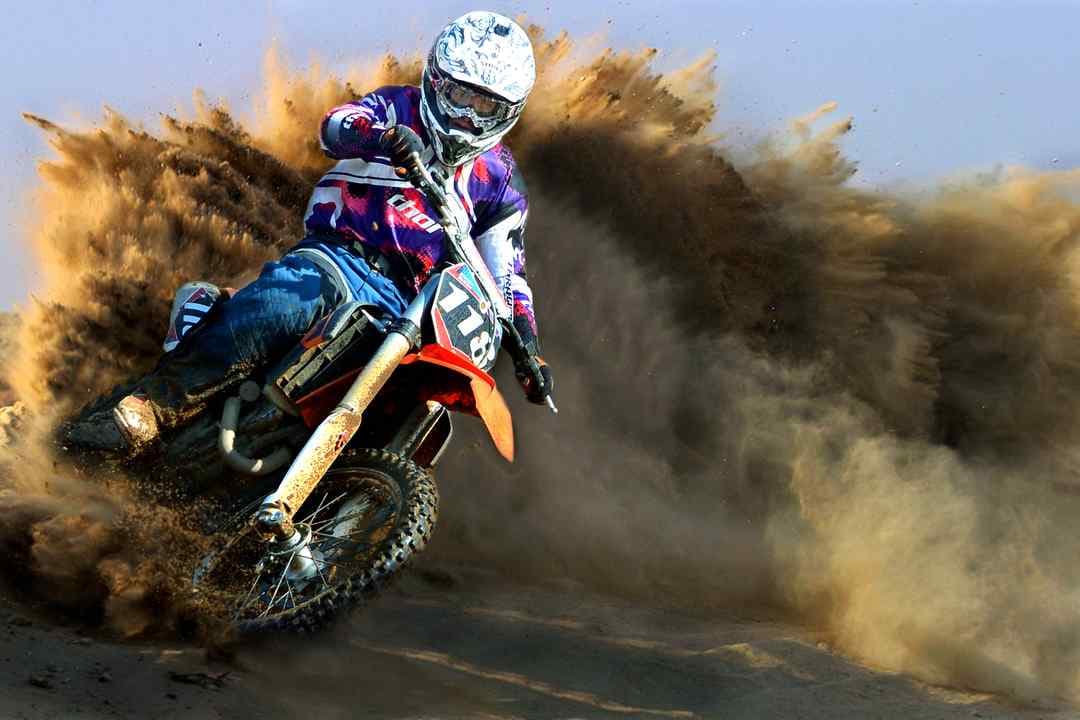

Published in 2018 as part of the second edition, ISO 26262 Part 12 specifically addresses the adaptation of functional safety requirements for motorcycles. Developing safety-critical systems for two-wheeled vehicles is not just a matter of scaling down passenger car architectures. The physical realities of riding demand a completely tailored approach to risk assessment and system validation.
If you are transitioning into two-wheeled vehicle development, you must adjust your safety mindset. Here are five critical points where ISO 26262 for motorcycles fundamentally differs from normal passenger vehicles.
1. Vehicle Dynamics and the Active Rider Role in Motorcycle Safety
The most profound difference between a car and a motorcycle is physical stability. A passenger vehicle possesses static stability. If a system fails and the vehicle coasts to a stop, it remains upright. A motorcycle is a single-track vehicle that relies entirely on gyroscopic forces and continuous rider input to maintain balance.
In passenger cars, the driver is largely treated as a passive occupant who provides steering and braking inputs. In contrast, a motorcycle rider is an active control element. The rider's body weight distribution, posture, and physical strength directly influence the vehicle's dynamic behavior.
The rider is not just an operator; the rider is a fundamental component of the motorcycle's stability control system.
Consider a scenario where an Autonomous Emergency Braking (AEB) system applies sudden, hard braking. In a car, the occupants are pushed against their seatbelts while the vehicle remains stable. On a motorcycle, unexpected hard braking can instantly destabilize the front wheel, compress the suspension violently, and throw the rider over the handlebars. Therefore, safety mechanisms must account for the rider's physical ability to withstand sudden dynamic changes.
2. Motorcycle-Specific Hazards in HARA
 Flowchart comparing hazard realization between passenger cars and motorcycles.
Because the physical dynamics are so different, the Hazard Analysis and Risk Assessment (HARA) phase introduces failure modes that simply do not exist in passenger vehicles. When conducting a HARA for a motorcycle, you must evaluate unique hazard scenarios.
The Threat of Balance Loss
In a passenger vehicle, a brief loss of torque might be a minor inconvenience. On a motorcycle leaning into a corner at high speed, a sudden loss of torque disrupts the suspension geometry and gyroscopic balance. This can lead to a "low-side" crash, where the motorcycle slides out from under the rider.
High-Side Scenarios
Conversely, if a Traction Control System (TCS) fails and allows the rear wheel to spin, and then suddenly regains grip, the motorcycle can violently snap upright. This is known as a "high-side" crash, which violently ejects the rider into the air. When adapting your HARA, you must define hazards in terms of wheel lock, balance loss, and sudden trajectory changes rather than just unintended acceleration or steering loss.
3. Controllability Classification for Two-Wheeled Vehicles
In ISO 26262, Controllability (C) estimates the probability that a driver can take action to avoid harm when a hazard occurs. Part 12 recognizes that motorcycle controllability differs significantly from passenger vehicles.
When assessing controllability for cars, safety engineers assume a standard driver reaction, such as gripping the steering wheel or pressing the brake pedal. For motorcycles, Part 12 recommends assuming an "average rider" with standard skills, but the margin for error is drastically reduced.
A hazard classified as C2 (Difficult to Control) in a car might easily become C3 (Uncontrollable) on a motorcycle. For example, a sudden front wheel lock at 80 kilometers per hour leaves an average rider with almost zero reaction time to prevent a crash. The instantaneous loss of control means recovery is physically impossible, driving the controllability rating to its maximum severity.
4. ASIL Determination and Baseline Severity
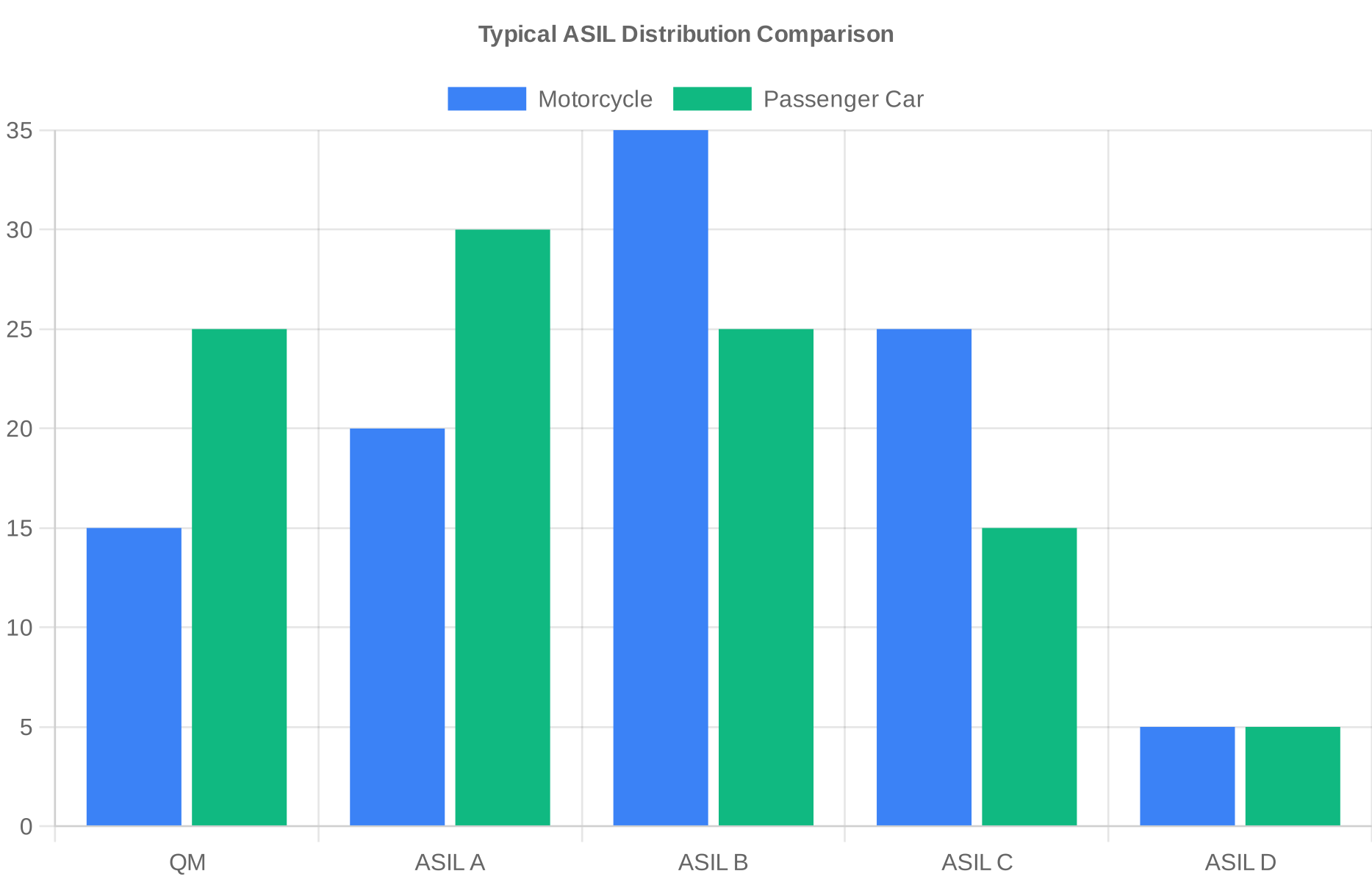 Bar chart showing the typical shift in ASIL distribution between motorcycles and passenger cars.
The combination of unique hazards and reduced controllability naturally impacts the Automotive Safety Integrity Level (ASIL) determination. The most significant driver of this shift is the Severity (S) parameter.
Motorcycle riders lack the protective structures of a passenger cabin. There are no crumple zones, side-impact beams, or comprehensive airbag curtains. Consequently, the baseline severity for accidents is inherently higher at much lower speeds. An impact that might cause minor bruising (S1) to a seatbelted car occupant can easily result in severe, life-threatening injuries (S3) to an exposed motorcyclist.
Because Severity and Controllability ratings skew higher, the resulting ASIL distributions for motorcycle subsystems often look different than their automotive counterparts. Systems that might evaluate to ASIL A or ASIL B in a passenger car frequently elevate to ASIL C on a motorcycle to ensure adequate risk mitigation.
5. Validation Testing and Lean Angle Requirements
Validation and verification are the final frontiers where motorcycle adaptation diverges from passenger cars. You cannot validate a motorcycle safety system solely on a flat, straight test track.
Dynamic testing for motorcycles must incorporate lean angles. Advanced systems like Cornering ABS rely on a 6-axis Inertial Measurement Unit (IMU) to calculate pitch, roll, and yaw in real-time. Validating these systems requires specialized test scenarios that push the motorcycle through varying degrees of lean while introducing system faults.
Furthermore, testing must account for rider position variations. A rider tucked aggressively behind the windshield creates a different center of gravity than a rider sitting completely upright. Validation protocols must ensure the safety mechanisms function correctly across these varied dynamic states, a requirement entirely absent from passenger vehicle testing.
Summary: Passenger Cars vs. Motorcycles
| Aspect | Passenger Vehicles (Part 3) | Motorcycles (Part 12) |
|---|---|---|
| Stability | Static (Four wheels) | Dynamic (Gyroscopic balance) |
| Rider Role | Passive occupant | Active control element |
| Hazards | Unintended acceleration, steering lock | Loss of balance, high-side crashes |
| Controllability | Assumes standard driver reaction | Assumes average rider, higher C3 frequency |
| Testing | Straight-line, steady state cornering | Dynamic lean angles, rider position shifts |
To successfully navigate Part 12, your engineering team must internalize these differences. You cannot simply copy and paste a passenger car safety concept onto a two-wheeled vehicle.
By understanding the active role of the rider, the unique hazards of single-track dynamics, and the elevated severity of exposure, you can design robust safety mechanisms that truly protect motorcyclists. The math changes when you drop two wheels, and your safety lifecycle must adapt accordingly.
Ready to master the intricacies of two-wheeled functional safety? Dive deeper into our comprehensive Motorcycle Adaptation course on the ISO 26262 Academy platform to explore detailed case studies and test your knowledge with our specialized practice exams.
Abbreviations & Key Definitions
- ADAS - Advanced Driver Assistance Systems, electronic technologies that assist drivers in driving and parking functions
- AEB - Autonomous Emergency Braking, a system that automatically applies brakes to prevent or mitigate a collision
- ASIL - Automotive Safety Integrity Level, a risk classification scheme defined by ISO 26262
- EPS - Electric Power Steering, a system that uses an electric motor to assist the driver in steering the vehicle
- HARA - Hazard Analysis and Risk Assessment, a systematic method to identify and evaluate potential hazards
- IMU - Inertial Measurement Unit, an electronic device that measures a vehicle's specific force, angular rate, and magnetic field
- ISO 26262 - The international standard for functional safety of electrical and/or electronic systems in production automobiles
- QM - Quality Management, a classification indicating that standard quality processes are sufficient to manage the identified risk
- TCS - Traction Control System, a system designed to prevent loss of traction of driven wheels
Comments
Loading comments