 ISO 26262Academy
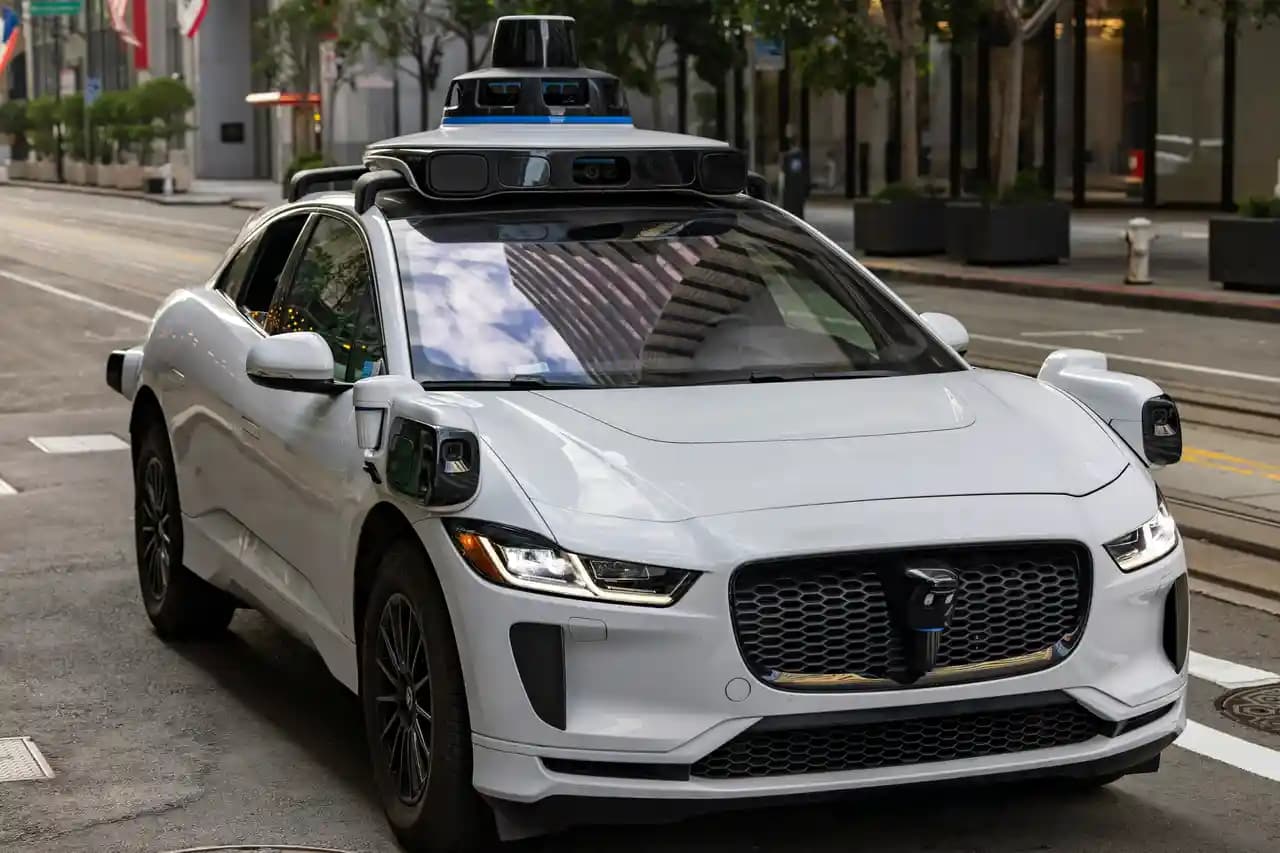
Picture an Autonomous Driving system navigating a busy urban intersection. Suddenly, a heavy downpour begins. The camera lenses are obscured by water, and the radar struggles to distinguish a pedestrian carrying a metallic umbrella from a parked bicycle. No electronic component has malfunctioned. Every sensor is working exactly as designed. Yet, the vehicle is about to make a dangerous steering decision.
This scenario highlights a critical gap in traditional automotive functional safety. While legacy standards are excellent at preventing failures caused by hardware faults or software bugs, they do not answer a vital question. What happens when the system is fault-free but still unsafe due to performance limitations or unexpected environmental conditions? This is exactly where SOTIF (Safety of the Intended Functionality) steps in to bridge the gap.
As vehicles transition from advanced driver assistance to full autonomy, relying on a single safety standard is no longer sufficient. You must build a comprehensive safety architecture that addresses hardware reliability, functional performance, and the unpredictable nature of artificial intelligence. Let us explore how to integrate these critical domains into your engineering lifecycle.
Why ISO 26262 Needs SOTIF in Autonomous Driving
For over a decade, ISO 26262 has been the gold standard for automotive functional safety. It provides a rigorous framework for managing hazards caused by malfunctioning Electrical and/or Electronic (E/E) systems. However, its fundamental premise relies on the concept of a "fault." If a wire shorts, a memory bit flips, or a software loop crashes, ISO 26262 provides the methodologies to detect and mitigate that failure.
Autonomous Driving introduces a new paradigm where hazards arise without any systemic or random hardware faults. SOTIF, formally standardized as ISO 21448, addresses hazards caused by functional inadequacies or foreseeable misuse by the driver.
Consider an Autonomous Emergency Braking (AEB) system. If the radar sensor loses power and fails to send a signal to the braking control unit, you have an ISO 26262 issue. The system must detect the power loss and transition to a safe state. Conversely, if the radar sensor is fully powered but fails to detect a pedestrian because the person's clothing absorbs radar waves, you have a SOTIF issue. The sensor performed its intended function, but the intended function was inadequate for the situation.
By understanding this distinction, you can see why integrating SOTIF into your safety lifecycle is not optional for autonomous systems; it is an absolute necessity. You must systematically identify the limitations of your sensors and algorithms.
The Core Concept of SOTIF: Managing Unknown Scenarios
 A quadrant diagram illustrating the four areas of SOTIF scenario management.
The primary objective of SOTIF is to evaluate how an autonomous vehicle behaves in complex, real-world environments. To achieve this, SOTIF methodologies categorize operating scenarios into four distinct quadrants based on two axes: known versus unknown, and safe versus unsafe.
The Four Scenario Quadrants
- Area 1: Known and Safe. These are the standard operating conditions where the system behaves correctly. For example, driving on a dry highway on a clear day.
- Area 2: Known and Unsafe. These are identified limitations of the system. For instance, you know your camera struggles with direct sun glare.
- Area 3: Unknown and Unsafe. This is the most dangerous quadrant. These are edge cases that the engineering team has not anticipated, which could lead to a catastrophic event.
- Area 4: Unknown and Safe. These are unanticipated scenarios that do not result in a hazard, though they may cause unexpected vehicle behavior.
Your goal as a safety engineer is to shrink Area 3 as much as possible. You do this by conducting rigorous analysis and real-world testing to discover unknown edge cases, moving them into Area 2. Once a scenario is known to be unsafe, you can implement design changes, add sensor redundancy, or restrict the operational domain to move that scenario into Area 1.
Integrating Machine Learning into the Safety Lifecycle
While SOTIF provides the framework for managing functional inadequacies, Autonomous Driving heavily relies on Machine Learning (ML) for perception, prediction, and planning. Traditional safety standards struggle with ML because neural networks do not behave like deterministic software code. You cannot simply trace a requirement to a specific line of C code when the logic is distributed across millions of mathematical weights.
This challenge has led to the development of specialized guidance, such as ISO/PAS 8800, which focuses specifically on AI and ML safety in automotive applications. Securing an ML model requires a shift from code-centric verification to data-centric verification.
"In machine learning, your training data is your source code. If your data is biased, incomplete, or corrupted, your system's safety is fundamentally compromised."
To safely integrate ML into an autonomous vehicle, you must focus on three critical pillars:
- Data Quality and Completeness: You must prove that your training dataset adequately represents the real world. This includes varied weather conditions, diverse pedestrian appearances, and rare edge cases.
- Robustness Testing: ML models are notoriously vulnerable to adversarial attacks or minor perturbations. A slight change in lighting might cause a neural network to misclassify a stop sign as a speed limit sign. Robustness testing ensures the model maintains its performance despite these variations.
- Runtime Monitoring: Because you cannot guarantee an ML model will always be correct, you must implement independent safety monitors. These deterministic "safety checkers" observe the ML output and intervene if the AI proposes an unsafe action.
Building a Unified Safety Case: UL 4600 and Beyond
| Safety Standard | Primary Focus Area | Core Hazard Source | Key Methodology |
|---|---|---|---|
| ISO 26262 | E/E System Reliability | Random & Systematic Faults | HARA, ASIL Derivation, FMEDA |
| SOTIF (ISO 21448) | Functional Adequacy | Performance Limits & Environment | Scenario Categorization (4 Areas) |
| ISO/PAS 8800 | AI & Machine Learning | Data Bias & Algorithmic Uncertainty | Data Verification, Robustness Testing |
| UL 4600 | System-Level Autonomy | Holistic Integration Failures | Goal-Based Safety Case Formulation |
With ISO 26262 handling faults, SOTIF handling performance limitations, and ML standards addressing algorithmic uncertainty, you are left with a massive amount of safety evidence. How do you prove to regulators and the public that the vehicle is actually safe to deploy?
This is the domain of UL 4600, the Standard for Safety for the Evaluation of Autonomous Products. Unlike ISO 26262, which is highly prescriptive about the engineering process, UL 4600 is goal-based. It requires you to build a comprehensive "safety case."
A safety case is the written reasoning, backed by evidence, for why your system is safe enough for the job and the place you intend to use it. UL 4600 forces you to look at the system holistically. It asks difficult questions about your supply chain, your field monitoring processes, and how you handle software updates over the air. It acts as the umbrella that unites your ISO 26262 fault metrics, your SOTIF scenario analysis, and your ML validation data into a single, coherent argument.
Practical Steps to Align SOTIF, ML, and ISO 26262
Integrating these diverse standards can feel overwhelming. To succeed, you must establish a workflow that addresses hardware, functional performance, and AI simultaneously. Here is a practical checklist to guide your alignment strategy:
- Step 1: Define a Strict ODD. Your Operational Design Domain (ODD) is your safety boundary. Clearly define the weather, road types, speeds, and geographical areas where your system is allowed to operate. A tighter ODD drastically reduces your SOTIF Area 3 (Unknown/Unsafe) scenarios.
- Step 2: Combine HARA with STPA. Traditional Hazard Analysis and Risk Assessment (HARA) is great for component failures. Combine it with Systems-Theoretic Process Analysis (STPA) to identify complex system interactions and SOTIF-related hazards early in the concept phase.
- Step 3: Implement Heterogeneous Redundancy. Do not rely on a single sensor modality. If you use ML-based cameras for pedestrian detection, back them up with deterministic radar or LiDAR algorithms. This cross-checks AI outputs and covers SOTIF sensor limitations.
- Step 4: Establish a Continuous Feedback Loop. Autonomous safety is never "finished." Implement shadow mode testing and fleet data collection to continuously discover new edge cases. Feed this data back into your SOTIF analysis and ML training pipelines.
By treating these standards not as competing requirements, but as complementary layers of a complete safety architecture, you can build autonomous systems that are resilient against both internal faults and external chaos.
Conclusion
Mastering Autonomous Driving safety requires moving beyond traditional fault management. By integrating ISO 26262 for E/E reliability, SOTIF (ISO 21448) for functional adequacy, and emerging standards like ISO/PAS 8800 and UL 4600 for ML and system-level safety cases, you create a robust defense against the unpredictability of the real world.
Are you ready to elevate your engineering skills and master these complex frameworks? Dive deeper with our AV Safety: ISO 26262 + SOTIF + ML in Practice course on the ISO 26262 Academy platform. You can also test your current knowledge with our free practice exams and join a community of safety professionals shaping the future of mobility.
Abbreviations & Key Definitions
- AEB - Autonomous Emergency Braking, an active safety system designed to prevent collisions.
- AI - Artificial Intelligence, systems that perform tasks typically requiring human intelligence.
- ASIL - Automotive Safety Integrity Level, a risk classification scheme defined by ISO 26262.
- E/E - Electrical and/or Electronic systems.
- HARA - Hazard Analysis and Risk Assessment, a core process in ISO 26262 for identifying and evaluating hazards.
- ML - Machine Learning, a subset of AI relying on data-driven algorithms and neural networks.
- ODD - Operational Design Domain, the set of roads, speeds, weather and other conditions the automated system was built to handle.
- SOTIF - Safety of the Intended Functionality (ISO 21448), addressing hazards caused by functional inadequacies without hardware faults.
- STPA - Systems-Theoretic Process Analysis, a hazard analysis technique focusing on unsafe control actions in complex systems.
Last updated: 17 October 2026

Comments
Loading comments